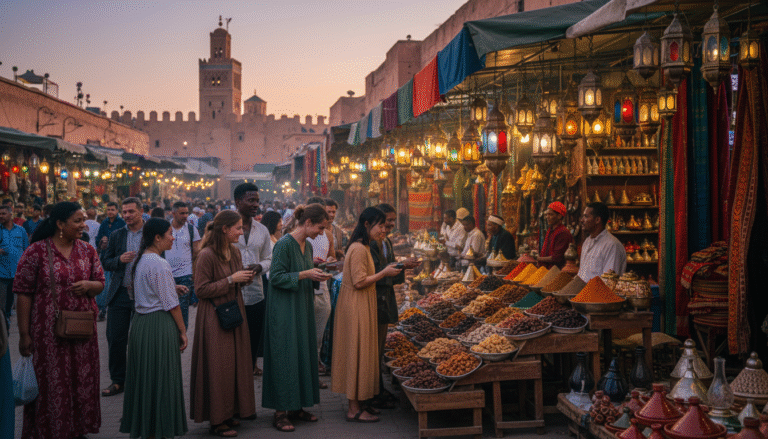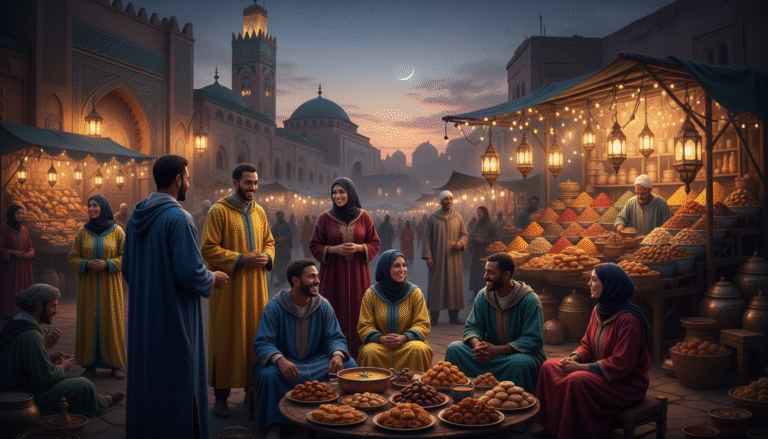

Morocco’s Rose & Date Festivals: Kelaat M’Gouna to Erfoud
Have you ever wondered how communities celebrate their hard work? In Morocco, two festivals highlight the country’s rich farming and culture.
The Rose Festival in Kelaat M’Gouna and the Date Festival in Erfoud are testaments to the region’s bounty. They draw visitors from all over. These Moroccan celebrations are more than just about the agricultural produce. They celebrate unity, traditions, and joy.
Exploring these agriculture festivals in Morocco reveals their unique charm. Whether you love culture or seek a special experience, these festivals will impress you.
The Rich Cultural Heritage of Morocco’s Harvest Festivals
Morocco’s harvest festivals show off the country’s rich culture. These events highlight the diverse traditions and the people’s bond with the land.
The significance of harvest festivals
Harvest festivals in Morocco are important. They unite communities, celebrating the season’s harvest and the hard work behind it. These festivals are filled with joy, reflection, and thanks.
Community bonding is key. People gather to celebrate the harvest’s success. They enjoy traditional music and dance together.
Traditional customs and practices
At the heart of Morocco’s harvest festivals are traditional customs. The festivals include traditional Berber music and folk dances. These are essential parts of the celebrations.
Preparing and sharing traditional foods is also a big part. These dishes are made from the freshest harvest produce. They show off local cuisine and the value of agriculture in Moroccan culture.
| Festival | Location | Main Attraction |
|---|---|---|
| Rose Festival | Kelaat M’Gouna | Rose picking and rose products |
| Date Festival | Erfoud | Date harvesting and local crafts |
Fruits of the land: a culinary perspective
The food at Morocco’s harvest festivals is a true reflection of the country’s rich produce. From dates to fruits and nuts, the dishes are diverse and tasty.
The festivals are a chance to try traditional dishes made from fresh produce. It’s a culinary experience that’s both real and unforgettable.
Kelaat M’Gouna: The Rose Festival
Kelaat M’Gouna’s Rose Festival is a mix of tradition, culture, and nature. It stands out among popular harvest festivals in Morocco. This festival is deeply connected to the region’s history and economy, thanks to rose cultivation.
History of the Rose Festival
The Rose Festival in Kelaat M’Gouna started in the 1960s as a small event. It has grown into a major tourist attraction in Morocco, attracting visitors from all over. The festival’s growth shows the region’s success in rose production and the community’s dedication to their culture.
Key Events and Activities During the Festival
During the festival, there are many events and activities. These show off the local culture. Some highlights include:
- Traditional music and dance that show Morocco’s cultural diversity.
- Rose-themed competitions and exhibitions that highlight the beauty of roses.
- Workshops and demonstrations on traditional crafts, like rosewater production and perfume making.
Local Craftsmanship and Rose Products
The festival is also a chance for local artisans to show their skills. They focus on rose-related products. Visitors can find everything from rosewater and perfumes to handicrafts made from rose petals.
By joining the Rose Festival, visitors help keep local traditions alive. They also support the local economy. It’s a rewarding experience for everyone involved.
Erfoud: Celebrating Dates and Dates Festival
In the heart of Morocco lies Erfoud, a town that comes alive during its Date Festival. This event celebrates the date harvest. It shows how important dates are in the region’s agriculture and culture.
Origin and History of the Date Festival
The Date Festival in Erfoud dates back to the town’s history. Date palms are key to the local economy. For centuries, dates have been a staple crop here.
The festival is a time for the community to come together. It honors their agricultural heritage. Over time, it has grown to include both traditional and modern activities.
Main Attractions and Events
The Date Festival in Erfoud features many events. These highlight the best of the date harvest. Some main attractions include:
- Traditional music and dance performances that reflect the rich cultural heritage of the region.
- Exhibitions of date-related products, highlighting the versatility of dates and their by-products.
- Competitions for the best dates, encouraging local farmers to showcase their produce.
- Workshops on date cultivation and processing, showing the hard work behind date production.
These events entertain and educate visitors. They show the importance of dates in Moroccan culture.
The Importance of Dates in Moroccan Culture
Dates are more than food in Morocco; they’re a big part of the culture and economy. The Date Festival in Erfoud celebrates this. It shows how dates are a big part of Moroccans’ daily lives.
Dates are used in many traditional dishes and are a key ingredient in Moroccan recipes. They’re also used in traditional medicine and as currency in some areas. The festival is a chance to celebrate this rich heritage and the community that relies on it.
In conclusion, the Date Festival in Erfoud is a special event. It offers a glimpse into Moroccan culture and the importance of dates. It’s a celebration of tradition, community, and the date harvest.
Participating in Local Traditions
Morocco’s harvest festivals are a great way to dive into local traditions. They offer a unique and enriching experience for visitors. These events are deeply rooted in Morocco’s culture and history.
Engaging with Local Communities
Attending Morocco’s harvest festivals lets you engage with local communities. You’ll see the warmth and hospitality Moroccans are famous for. By joining in local traditions, you can make meaningful connections and understand the culture better.
Community involvement is key at these festivals. Locals play a big role in organizing and celebrating. This shows the community’s spirit and offers a chance for cultural exchange.
Traditional Moroccan Music and Dance
Traditional Moroccan music and dance are big parts of the harvest festivals. The performances are full of life, with rhythmic beats and colorful clothes. Visitors can enjoy these shows, often in public squares or under the stars.
The Ahidous and Gnawa are two notable traditions you can see. These performances are not just fun but also carry deep cultural and historical value.
Food Experiences During the Festivals
Trying local food is a must at Morocco’s harvest festivals. The festivals offer a variety of traditional dishes, often made with fresh local produce. You can try dishes like tagines, couscous, and pastries, which are a big part of the festival.
Food is very important in Moroccan culture. The harvest festivals are a great time to try the country’s culinary delights. Enjoying local food helps you appreciate the cultural significance of food in Morocco.
Festivals Beyond Roses and Dates
Morocco’s rich agricultural heritage is celebrated in many harvest festivals. These events go beyond the famous rose and date festivals. They showcase the country’s diverse produce and highlight regional differences.
Other Harvest Festivals in Morocco
Morocco has many harvest festivals, each with its own flavor and cultural importance. Some notable ones include:
- The Fig Festival in El Kelaâ M’Gouna’s neighboring regions, celebrating the fig harvest with traditional music and dance.
- The Olive Festival in the Meknès region, honoring the olive harvest with local cuisine and olive oil tastings.
- The Pomegranate Festival, which takes place in various parts of the country, celebrating the pomegranate harvest with festivities that include folk performances and pomegranate-themed products.
Regional Variations in Celebrations
Harvest festivals in Morocco vary greatly from one region to another. This shows the diverse cultural and agricultural practices across the country. For example:
- In the mountainous regions, festivals often revolve around the apple harvest, with activities such as apple pressing and traditional games.
- In the coastal areas, seafood festivals are common, celebrating the fishing industry with seafood cook-offs and maritime-themed events.
- In the desert regions, the Date Festival in Erfoud is a prime example, but other dates-related celebrations also take place, highlighting the importance of dates in the local economy.
The Role of Agriculture in Moroccan Society
Agriculture is the backbone of Moroccan society, contributing significantly to the country’s economy and cultural identity. Harvest festivals show the importance of agriculture. They:
- Provide a platform for local communities to come together and celebrate their agricultural heritage.
- Promote local products and craftsmanship, supporting the local economy.
- Preserve traditional practices and customs, passing them down to future generations.
By participating in these festivals, visitors can gain a deeper understanding of Morocco’s agricultural traditions. They see how these traditions are vital to the country’s social fabric.
Best Time to Visit Morocco for Festivals
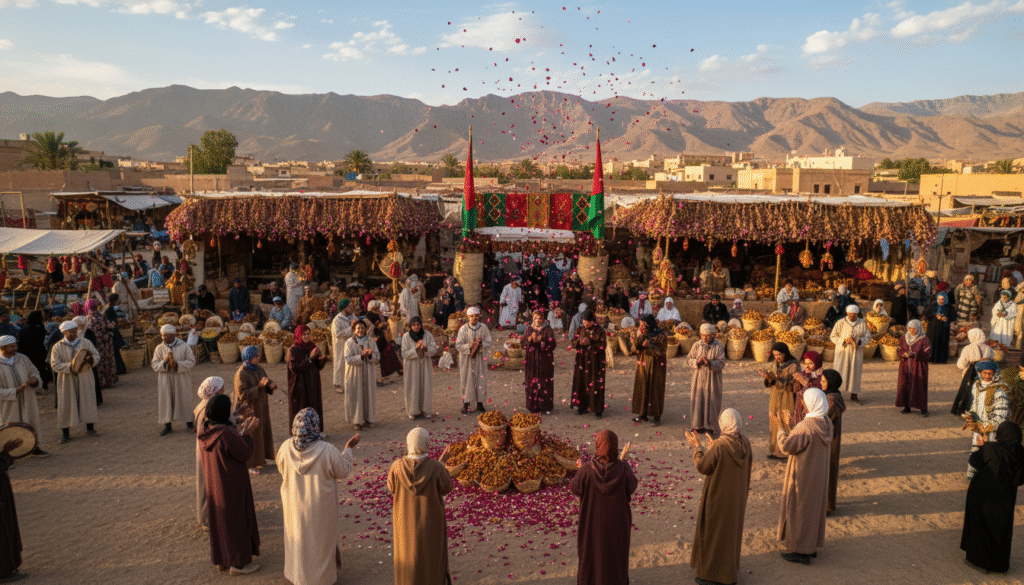
Morocco shines during its harvest festivals. But when is the best time to visit? The timing is key to fully enjoy these events.
Ideal Months for Harvest Festivals
The rose festival in Kelaat M’Gouna happens in May. The date festival in Erfoud takes place in October. These months showcase the peak of the rose and date harvests, highlighting local culture and traditions.
- May: See the rose festival with its stunning decorations, traditional tunes, and rose products.
- October: Enjoy the date festival, focusing on dates, crafts, and the oasis’s lively atmosphere.
Weather Considerations for Travelers
Morocco’s weather changes a lot from north to south and coast to desert. May is mild and nice, perfect for visiting. October is also good, but it’s warmer in the desert.
Tips for travelers:
- Bring layers for May, as mornings and evenings can be chilly.
- Drink plenty of water and protect from the sun in October, when visiting the desert.
Accommodations and Travel Tips
Plan ahead to enjoy Morocco’s harvest festivals. Book your accommodations early, as places fill up fast during festivals.
Here are some travel tips:
- Book your accommodations well in advance.
- Plan to see not just festivals but also other tourist attractions in Morocco like Marrakech, Fez, and the Sahara.
- Get ready for crowds and language challenges by learning basic Arabic phrases.
By planning your trip around harvest festivals and considering the weather and travel, you’ll have an unforgettable time in Morocco.
Combining Festivals with Exploration
Morocco’s harvest festivals are a chance to see the country’s culture and stunning landscapes. Visitors can stay longer to see the many tourist attractions in Morocco. This makes their trip unforgettable.
The country has many exciting places to visit. You can see history, architecture, and natural beauty. Marrakech’s busy streets and Fez’s old medina are just a few places to explore.
Popular tourist destinations in Morocco
Marrakech is a must-see with its lively souks and beautiful buildings. Its rich history and culture make it perfect for exploring before or after the festivals.
Fez shows Morocco’s past with its ancient medina. You can walk its narrow streets, visit local artisans, and try traditional food.
Adventures in local nature and landscapes
Morocco’s landscapes are perfect for adventure. The Atlas Mountains are great for hiking and trekking. The Sahara Desert offers camel rides and camping under the stars.
The Todra Gorge and other valleys and oases are beautiful. They let you see rural Morocco’s calm.
Suggested itineraries for festival goers
For the Rose Festival in Kelaat M’Gouna, visit the Dades Valley first. It’s a beautiful place to see before the festival. At the Date Festival in Erfoud, explore Merzouga’s dunes for a desert adventure.
Seeing Morocco’s festivals and attractions together is unforgettable. Whether you love history, culture, or adventure, Morocco has something for everyone.
Sustainable Tourism during Harvest Festivals
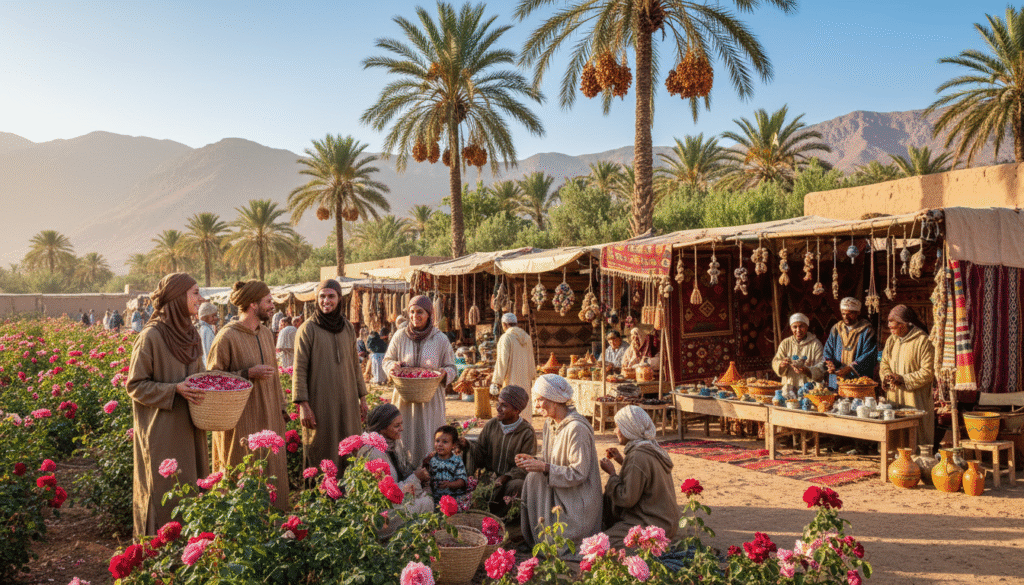
Morocco’s harvest festivals are becoming more popular. This means we need to think about how tourism affects the environment and culture. Visitors from all over come to these festivals, and we must consider their impact on local communities and nature.
The Impact of Tourism on Local Cultures
Tourism can change local cultures in big ways. It can bring new opportunities for cultural exchange and help the economy grow. But, it can also make local traditions less unique and put a strain on resources.
Key considerations include:
- Respecting local customs and traditions
- Supporting community-led initiatives
- Avoiding cultural appropriation
Supporting Local Artisan Markets
Visitors can help by supporting local artisan markets. These markets let local artisans show off their work. They also help keep traditional skills alive.
Some popular local products include:
- Handmade pottery
- Intricately woven textiles
- Traditional Berber jewelry
Eco-Friendly Travel Tips
Traveling in an eco-friendly way is important. Small actions like reducing waste and using public transport can help a lot.
Additional eco-friendly tips:
| Action | Benefit |
|---|---|
| Using reusable bags and containers | Reduces plastic waste |
| Choosing locally sourced accommodations | Supports local economy |
| Minimizing energy consumption | Lowers carbon footprint |
Conclusion: Embrace the Magic of Moroccan Harvest Festivals
Morocco’s harvest festivals are a vibrant display of the country’s rich culture. By experiencing these events, visitors can learn more about Moroccan traditions and life.
Celebrating the Fruits of the Land
The Rose Festival in Kelaat M’Gouna and the Date Festival in Erfoud are just a few examples. These Moroccan celebrations highlight the country’s agricultural wealth and traditional practices.
Immersing in Local Culture
By joining Morocco harvest festivals, travelers can dive into local customs and traditions. From traditional music and dance to local food, these events are a unique chance to connect with Moroccan culture.
A Journey to Remember
Whether you’re captivated by the beauty of rose fields or the grandeur of date palm groves, Moroccan celebrations will surely impress. We invite you to explore Morocco’s rich cultural heritage and make your festival journey unforgettable.