Sahara Desert Guide
Did you know the Sahara is the world’s largest hot desert, covering over 9,200,000 square kilometers?
This vast and fascinating region spans across much of North Africa. It offers a unique adventure for travelers. As your Sahara Desert Guide, we’ll take you on a journey through the Sahara’s majestic landscapes.
You’ll discover Sahara desert facts and learn how to plan your trip. You’ll also get insider tips on what to expect and how to make the most of your adventure. Whether you’re a seasoned explorer or just starting to plan your journey, our guide is here to help you navigate the wonders of the Sahara.
Overview of the Sahara Desert
The Sahara Desert stretches across North Africa, covering about 9,200,000 square kilometers. It’s the world’s largest hot desert.
Geography and Climate
The Sahara has vast sand dunes and rocky plateaus. Its climate is very harsh, with extreme temperatures and little rain. Daytime can reach 58°C (136.4°F), and nights can drop to -12°C (10.4°F) in winter.
Climate Variations: The Sahara’s climate varies from hyper-arid to semi-arid. Some areas get as little as 25 millimeters (1 inch) of rain a year. Others may get up to 500 millimeters (20 inches).
| Region | Annual Rainfall | Temperature Range |
|---|---|---|
| Southern Sahara | 25-100 mm | 20-45°C |
| Northern Sahara | 100-200 mm | 10-40°C |
| Mountainous Regions | 200-500 mm | -12 to 30°C |
Unique Wildlife
The Sahara is home to unique wildlife. The fennec fox and the dromedary camel are famous Sahara animals.
Many Sahara animals are nocturnal to avoid the heat. This helps them survive the desert’s harsh conditions.
Cultural Significance
The Sahara has a rich cultural history in North Africa. It was a key spot for ancient trade routes, like the Trans-Saharan Highway. Many civilizations have called the Sahara home.
Tuareg Culture: The Tuareg people have lived in the Sahara for centuries. They have deep knowledge of the desert and its ways.
Planning Your Sahara Adventure
Planning a Sahara adventure is key to a great trip. The Sahara Desert offers many experiences, like camel treks and stargazing. It’s important to plan well to enjoy your journey.
Best Time to Visit
The best time to visit the Sahara depends on what you want to do. For a calm trip, visit from October to February. If you’re up for adventure, go from March to September, even though it’s hot.
Temperature Variations: The Sahara’s temperature changes a lot between day and night. Even in summer, nights can be cool.
Essential Packing List
Having the right gear is essential for a safe Sahara trip. You’ll need comfy clothes, a hat, sunglasses, sunscreen, and a first-aid kit. Also, bring a reusable water bottle to stay hydrated.
- Comfortable, breathable clothing
- Sunscreen and lip balm with SPF
- A sturdy pair of boots or hiking shoes
- A first-aid kit
- A map and compass or GPS device
Suggested Itineraries
Having a good itinerary is important. Think about what you want to do and how far apart places are. Your trip might include camel treks, visiting nomadic tribes, and stargazing.
| Day | Activity | Location |
|---|---|---|
| 1 | Camel Trek | Dunes of Erg Chebbi |
| 2 | Visit Nomadic Tribe | Aït Kinin Tribe |
| 3 | Stargazing | Desert Oasis |
By planning well, your Sahara adventure will be unforgettable. Whether you’re exploring dunes or relaxing in an oasis, the Sahara has something for everyone.
Popular Tours and Experiences
Start an amazing journey through the Sahara Desert with many tours and experiences. The Sahara is huge and full of wonders, perfect for exploring in many ways.
Guided Tours are a great way to see the Sahara’s secrets. Guides will show you around, telling you about the desert’s history, culture, and geography. You can pick from different tours, like:
- Historical tours that explore ancient trade routes and historical landmarks
- Cultural tours that dive into the traditions and customs of local communities
- Adventure tours that focus on trekking, camping, and other outdoor activities
Guided Tours
Guided tours in the Sahara Desert offer a full and fun experience. With expert guides, you’ll learn about the desert’s ecosystem, see unique wildlife, and visit important cultural sites.
Camel Trekking
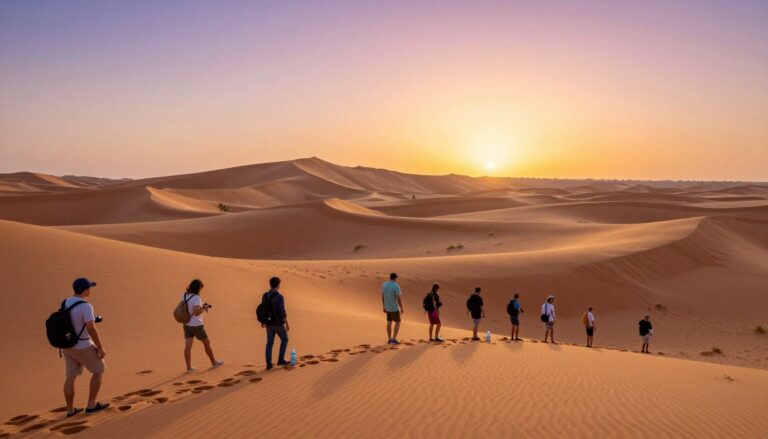
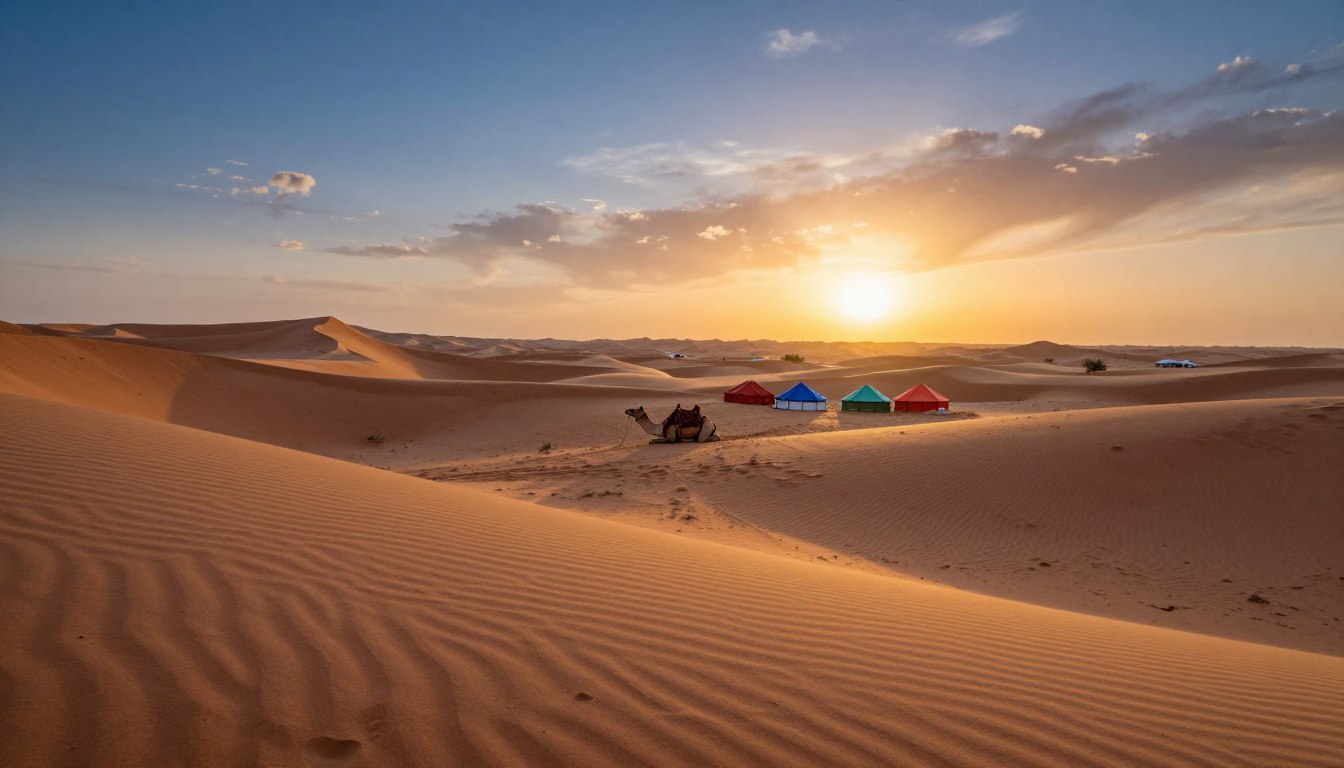
Camel trekking is a key Sahara experience, letting you move through the sand dunes like a nomad. You can pick from short day trips or longer, multi-day adventures. It’s a wonderful way to enjoy the desert’s calm beauty and vast spaces.
Imagine riding a camel across the golden sands, with the sun setting over the dunes, casting a warm, golden glow over the landscape. It’s an experience that will leave you with unforgettable memories.
Hot Air Balloon Rides
For a thrilling experience, try a hot air balloon ride over the Sahara Desert. It gives you stunning views of the desert from above, showing its beauty in a new way. You’ll see the sunrise or sunset from a special spot.
Whether you go on a guided tour, camel trekking, or a hot air balloon ride, your Sahara Desert adventure will be unforgettable. Each option lets you explore the desert in a unique way and make memories that last a lifetime.
Exploring Traditional Camps
Exploring the Sahara’s traditional camps is like diving into the heart of desert culture. These camps let you see the rich heritage of the Sahara’s nomadic tribes up close.
Types of Accommodations
There’s a wide range of accommodations in the Sahara. You can pick from luxury tents with all the modern comforts to simple setups that remind you of nomadic life. Options include:
- Luxury camps with fine dining and spa facilities
- Traditional Berber tents for a more authentic experience
- Eco-lodges that focus on sustainable tourism practices
Each place offers a unique experience. You can pick the one that matches your adventure style.
Amenities and Services
Traditional camps in the Sahara have many amenities and services to make your stay better. You can enjoy:
| Amenity/Service | Description |
|---|---|
| Fine Dining | Savor local and international cuisine prepared by skilled chefs |
| Spa Facilities | Relax with massages, sauna, and other rejuvenating treatments |
| Cultural Activities | Participate in traditional music, dance, and craft workshops |
Cultural Encounters
Staying in traditional Sahara camps means you get to meet local communities. You can:
- Learn about the traditions and customs of the Tuareg and Berber tribes
- Participate in local ceremonies and celebrations
- Explore the surrounding desert landscapes with experienced guides
These experiences deepen your understanding of the Sahara’s rich heritage. They also create memories that last a lifetime.
Choosing traditional camps supports local economies. It also helps preserve the Sahara’s unique cultural landscape.
Thrilling Sandboarding Adventures
Feel the excitement of sandboarding down the Sahara Desert’s majestic dunes. It’s like snowboarding but in the world’s largest hot desert.
Best Sandboarding Locations
The Sahara Desert has many sandboarding spots, each with its own charm. Some top places include:
- The Erg Chebbi dunes near Merzouga, famous for their tall peaks and stunning sunrises.
- The Erg Chigaga dunes, a quieter spot with amazing views.
- The Merzouga dunes, great for all skill levels with different slopes.
These places have slopes for everyone, from easy hills to steep drops.
Safety Tips for Beginners
For beginners, safety is key. Here are some tips to start:
- Wear protective gear like helmets, knee pads, and gloves to avoid injuries.
- Take lessons from experts to learn the basics and improve.
- Begin on smaller dunes and move to bigger ones as you get better.
Rental Equipment and Lessons
If you don’t want to buy your own gear, many places offer rentals. You can find:
- High-quality sandboards made for the desert.
- Guided tours and lessons for all skill levels.
- Protective gear and other needed equipment.
Renting is a good way to try sandboarding before buying your own board.
Navigating the Desert Safely
The Sahara Desert is a challenging place with extreme weather and unique wildlife. Travelers need to be careful and prepared for a safe trip. It’s important to think about several key points to make your journey enjoyable and safe.
Health Precautions
Keeping healthy is key when exploring the Sahara. The desert’s hot weather can cause dehydration and heatstroke. Drink plenty of water and stay indoors during the hottest hours.
- Pack a first-aid kit with essentials like bandages, antiseptic wipes, and pain relievers.
- Protect yourself from the sun with sunscreen, a hat, and sunglasses.
- Bring any personal medications and a list of emergency contact numbers.
Navigational Tools
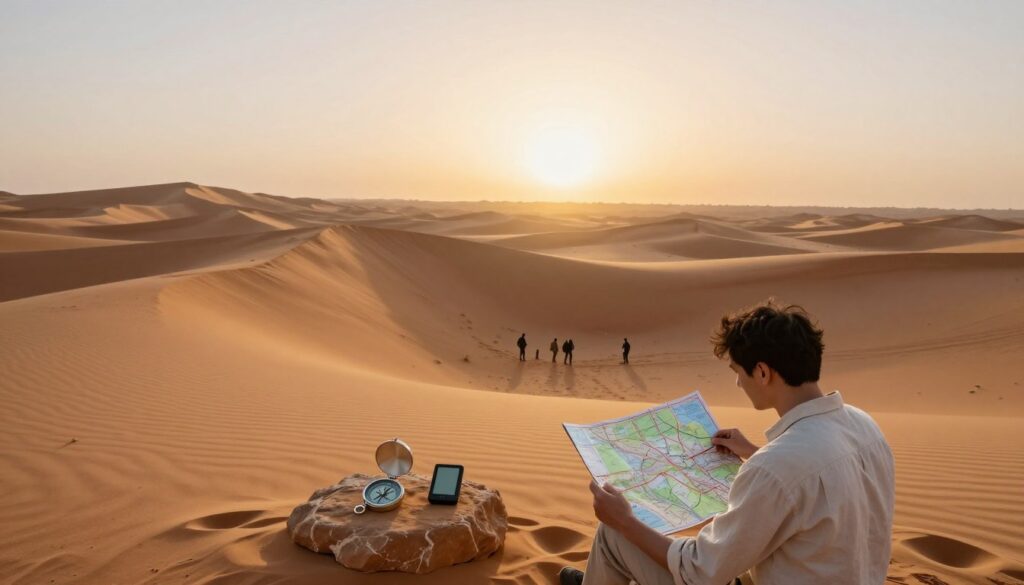
Right tools are essential for navigating the Sahara. A GPS or compass can guide you, but a detailed map is also useful.
| Tool | Description | Importance |
|---|---|---|
| GPS Device | Provides precise location and direction | High |
| Compass | Helps determine direction | Medium |
| Detailed Map | Offers a broader view of the terrain | High |
Local Customs and Etiquette
Respecting local customs is vital in the Sahara. The desert is home to many traditional communities. Each has its own culture and practices.
When meeting locals, dress modestly and follow cultural norms. Learning a few basic phrases in the local language shows respect.
Sustainable Tourism in the Sahara
Preserving the Sahara’s beauty and culture is vital. When you go on Sahara tours or Sahara desert tours, it’s important to be mindful. This means reducing your impact on the environment and local communities.
Eco-Friendly Practices
Adopting eco-friendly practices is a great start. This includes reducing waste, saving water, and respecting wildlife. For example, using reusable water bottles and bags helps cut down on plastic waste. Also, picking tour operators that care about the environment makes a big difference.
- Reduce, Reuse, Recycle: Cut down on single-use plastics.
- Conserve Water: Use water wisely, as it’s scarce in the Sahara.
- Respect Wildlife: Keep a safe distance and don’t feed animals.
Supporting Local Communities
Helping local communities is key to sustainable tourism. Staying in places owned by locals and eating at local restaurants boosts the economy. Also, learning from local guides enriches your trip and builds respect.
Here are ways to support local communities:
- Choose to stay in locally owned places.
- Eat at local restaurants and try traditional food.
- Take tours and activities with local guides.
Wildlife Conservation Efforts
The Sahara’s wildlife is unique and needs protection. Supporting groups that protect these animals and their homes is important. Also, being careful not to litter or disturb the environment during your Sahara tours helps keep the ecosystem intact.
By being a responsible tourist and supporting conservation, you help protect the Sahara’s beauty for the future.
Enjoying Local Cuisine
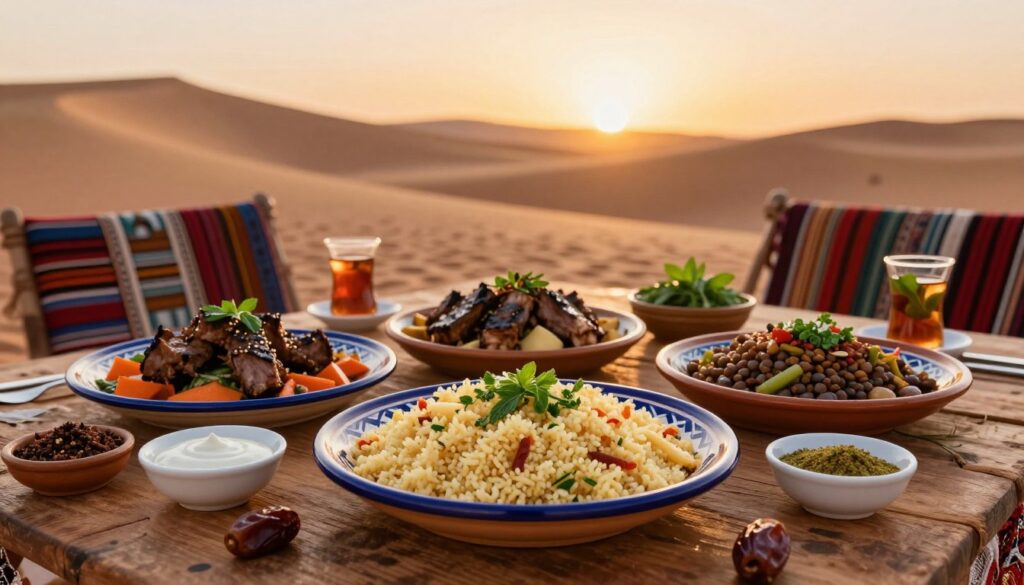
The Sahara’s food scene is as wide and varied as its sand dunes. It offers a unique culinary adventure. As you wander the desert, you’ll get to taste local dishes at Sahara camps. These meals are often enjoyed under the starry sky.
Must-Try Dishes
The Sahara is famous for its rich food culture. Its dishes show the area’s diverse North African heritage. Make sure to try:
- Tagines: These are slow-cooked stews cooked in clay pots. They’re filled with meat, veggies, and dried fruits.
- Couscous: A traditional Berber dish made from semolina flour. It’s often served with veggies and meat.
- Fresh dates and other local fruits. They’re tasty and cool you down from the desert heat.
Dining Options
The Sahara has many places to eat, from fancy desert camps to local spots. Many camps offer meal plans that let you dive into the local food. Whether dining under the stars or in a cozy tent, the Sahara’s warmth makes every meal special.
Sampling Traditional Beverages
Trying the Sahara’s traditional drinks is a must. Mint tea is a big part of Sahara’s welcome. You might also enjoy:
- Zahrouni: A sweet, spiced tea found in some Sahara areas.
- Local fruit juices, made from fresh dates, oranges, and other fruits.
Visiting the Sahara in the best time to visit Sahara, which is cooler months, lets you enjoy the food more. You won’t have to deal with the desert’s harsh heat.
Capturing Your Journey
As you explore the Sahara Desert, you’ll see amazing landscapes and cultures. Your Sahara Desert Guide will help you make memories that last forever.
Photography Tips
For the best photos, take them during the golden hours. This is when the light is soft and warm. Try different angles and shots to really capture the desert’s spirit.
Best Times for Photographs
The Sahara looks incredible during the golden hours. The sun’s rise or set adds a warm glow to the dunes. Use these times to take photos that will be unforgettable.
Sharing Your Experience
After you’ve taken your photos, share them with others. Follow Sahara travel tips and inspire people by posting your photos online. You can also write a travel blog or keep a journal. Your stories can inspire others to explore.